


Understanding the Types of Industrial Valves
- Everyvalve Ltd

- Feb 20
- 4 min read
Industrial valves play a crucial role in controlling the flow of liquids, gases, and slurries within various systems. They are essential components in industries such as oil and gas, water treatment, chemical manufacturing, and power generation. Understanding the different types of industrial valves helps in selecting the right valve for specific applications, ensuring efficiency, safety, and longevity of the system.
Types of Industrial Valves
There are several types of valves used in industrial settings, each designed for specific functions and operating conditions. The most common types include:
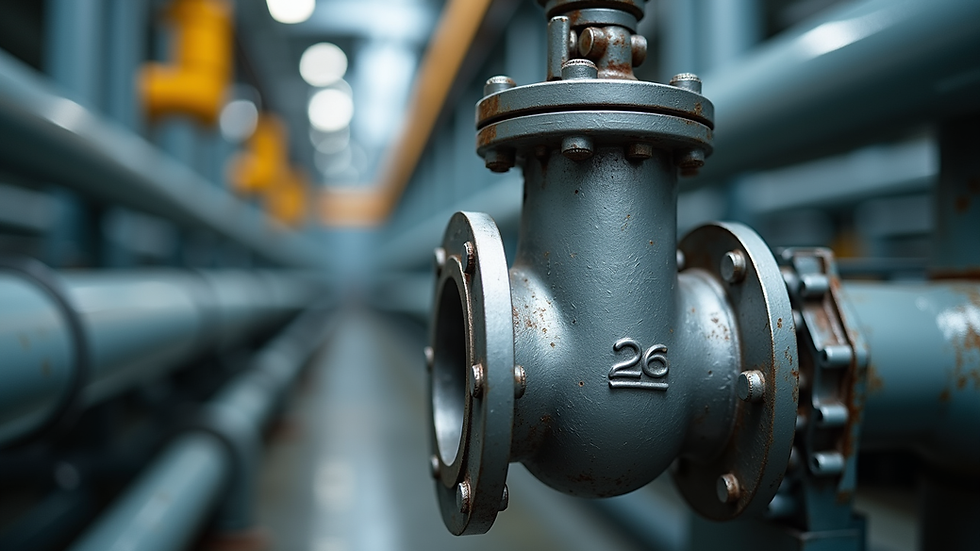
Gate Valves: These valves operate by lifting a gate out of the path of the fluid. They are primarily used for on/off control and are not suitable for throttling. Gate valves provide a straight flow path with minimal pressure drop.
Globe Valves: Designed for regulating flow, globe valves have a movable disk-type element and a stationary ring seat. They offer good throttling capabilities and are often used in applications where flow control is necessary.
Ball Valves: Featuring a spherical disc, ball valves provide quick shutoff and are highly durable. They are ideal for applications requiring tight sealing and are commonly used in gas and liquid pipelines.
Butterfly Valves: These valves use a rotating disc to control flow. They are lightweight, cost-effective, and suitable for large diameter pipes. Butterfly valves are often used in water supply and wastewater treatment.
Check Valves: Also known as non-return valves, check valves allow fluid to flow in one direction only, preventing backflow. They are essential in systems where reverse flow could cause damage.
Plug Valves: These valves use a cylindrical or conically tapered plug to control flow. They are simple in design and provide quick operation, often used in slurry or viscous fluid applications.
Diaphragm Valves: Utilizing a flexible diaphragm to control flow, these valves are excellent for handling corrosive or abrasive fluids. They provide tight sealing and are easy to maintain.
Each valve type has unique features that make it suitable for specific industrial processes. Selecting the right valve depends on factors such as pressure, temperature, fluid type, and required flow control.

What are industrial valves?
Industrial valves are mechanical devices used to regulate, direct, or control the flow of fluids by opening, closing, or partially obstructing passageways in pipelines. They are vital components in various industrial systems, ensuring safe and efficient operation.
These valves come in different sizes, materials, and designs to accommodate diverse industrial needs. For example, valves made from stainless steel are preferred in corrosive environments, while cast iron valves are common in water distribution systems.
The primary functions of industrial valves include:
Flow Control: Adjusting the flow rate of fluids within a system.
Isolation: Completely stopping the flow for maintenance or safety.
Non-return: Preventing backflow to protect equipment.
Pressure Regulation: Maintaining system pressure within safe limits.
Understanding these functions helps in choosing the appropriate valve type and material for specific applications.

Key Factors in Selecting Valve Types
Choosing the right valve type involves considering several critical factors:
Fluid Characteristics
The nature of the fluid - whether it is liquid, gas, slurry, corrosive, or abrasive - influences valve selection. For example, diaphragm valves are suitable for corrosive fluids, while ball valves handle gases effectively.
Pressure and Temperature
Valves must withstand the operating pressure and temperature of the system. High-pressure systems may require robust gate or globe valves, while low-pressure applications can use butterfly valves.
Flow Control Requirements
If precise flow regulation is needed, globe valves or needle valves are preferred. For simple on/off control, gate or ball valves are more appropriate.
Maintenance and Durability
Some valves require frequent maintenance, while others are designed for long service life with minimal upkeep. Consider ease of access and replacement parts availability.
Cost and Installation
Budget constraints and installation complexity also play a role. Butterfly valves are generally more cost-effective and easier to install in large pipelines.
By evaluating these factors, industries can optimize their systems for performance and cost-efficiency.
Applications of Different Valve Types
Each valve type finds its niche in various industrial applications:
Gate Valves: Used in oil and gas pipelines for isolation purposes due to their ability to provide a tight seal.
Globe Valves: Common in steam systems and cooling water circuits where flow regulation is essential.
Ball Valves: Widely used in chemical processing plants for quick shutoff and tight sealing.
Butterfly Valves: Ideal for large water distribution systems and HVAC applications.
Check Valves: Installed in pump discharge lines to prevent backflow and protect equipment.
Plug Valves: Suitable for handling slurries in mining and wastewater treatment.
Diaphragm Valves: Preferred in pharmaceutical and food industries for hygienic fluid control.
Understanding these applications helps in matching valve types to operational needs effectively.
Tips for Maintaining Industrial Valves
Proper maintenance extends the life of valves and ensures system reliability. Here are some practical tips:
Regular Inspection: Check for leaks, corrosion, and wear. Early detection prevents costly failures.
Lubrication: Apply appropriate lubricants to moving parts to reduce friction and wear.
Cleaning: Remove debris and deposits that can obstruct valve operation.
Testing: Periodically test valve function to ensure proper opening and closing.
Replacement of Seals: Replace worn seals and gaskets to maintain tightness.
Documentation: Keep maintenance records to track valve performance and schedule future servicing.
Implementing a maintenance schedule tailored to the valve type and operating conditions enhances safety and efficiency.
Enhancing System Efficiency with the Right Valve Choice
Selecting the correct valve type is not just about functionality but also about improving overall system efficiency. The right valve minimizes pressure drops, reduces energy consumption, and lowers maintenance costs.
For example, using a butterfly valve in a large diameter pipeline reduces weight and cost compared to a gate valve. Similarly, ball valves provide quick operation, saving time during emergency shutoffs.
Investing time in understanding valve characteristics and system requirements leads to better decision-making and long-term benefits.
For more detailed information on industrial valves, their types, and applications, exploring technical resources and manufacturer guides is highly recommended.


Comments